AI Tracking Tools That Help You Dominate ChatGPT and SGE Results
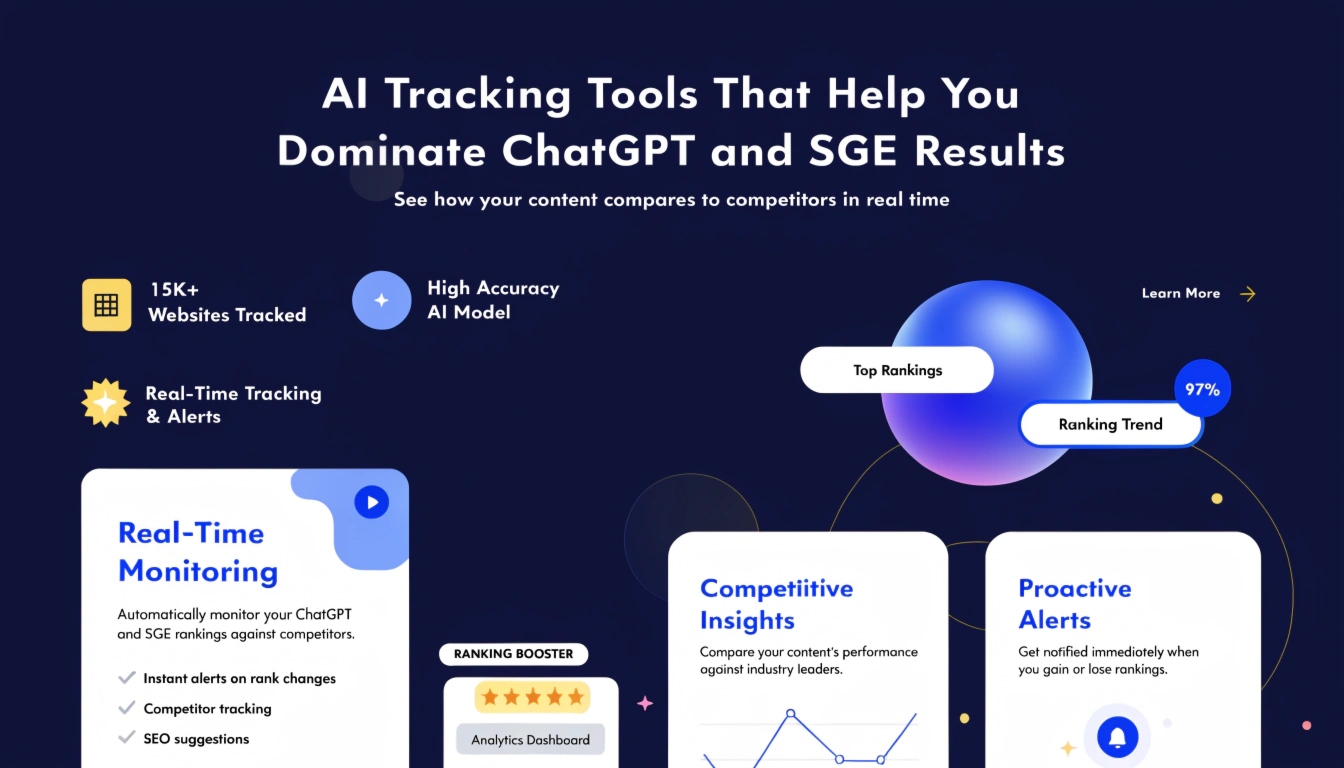
SEO is changing very fast due to the emergence of AI-powered engines such as ChatGPT and Google Search Generative Experience (SGE). It is no longer sufficient to optimize websites solely based on Google's rankings. Instead, people are getting answers without even clicking on any links. It has created a new, exclusive area of SEO known as Generative Engine Optimization (GEO).
If you are not present in the AI-powered responses, then you are basically not present at all. There are AI tracking tools that can support you with this situation by allowing you to track, analyze, and optimize your facts within AI-powered search areas.
In today's blog post, we will be talking about the best AI tracking tools available, along with how they work and how you can beat ChatGPT and SGE with them.
The Paradigm Transition: Keywords to AI Citations
AI-driven search engines no longer rank content; they retrieve, analyze, and cite sources. When you pose a question to ChatGPT or activate the AI overview function on Google, the algorithm looks through its database, analyses the relevance of the entity to the query, determines the authority of the source, and delivers a response, including source chips or references. In recent SEO practices, neither exact keyword matching nor link-building can make your page rank higher; instead, what you need to pay attention to are:
- Quality of the entity match: The relevance of your content to the entities that AI models understand.
- Indicators of source credibility: E-E-A-T, schema markup, authorship, and direct referencing of sources.
- Quality criteria of an answer: Properly formulated, conversational content that answers the question and is retrievable by LLM.
- Citation frequency: How often your website gets referenced in the responses that AI algorithms generate from various prompts.
How AI Tracking Tools Work
Generative AI tracker tools represent a set of applications that track the results delivered by the generative AI models on your content. Unlike ranking URLs using conventional rank trackers, these tools perform such actions as:
- Conducting automatic campaigns on ChatGPT, Google AI Overviews, Bing Copilot, and other AI models.
- Scraping and analyzing AI content in order to see which sources were used, how frequently, and in what context.
- Mapping entities in order to demonstrate the structure and hierarchy of your brand, topics, and expertise from the point of view of the AI model.
- Tracking AI-driven traffic, including referral routes via AI answer chips and conversational UIs.
- Giving recommendations on optimizing how LLMs perceive, cite, and paraphrase your content.
These are some of the instruments used to continuously test, measure, and optimize the process in a cycle.

5 AI Tracking Tools That Give You the Edge
1. SEMrush: AI Visibility Tracker
The SEMrush AI Visibility Tracker was designed specifically with AI Overviews and ChatGPT tracking features. Thousands of query variants are processed daily, but the tracker will analyze sources used in AI results and find your competition in the given niche. In addition, prompt-level analysis will indicate the impact that even the smallest change in wording will have on the source selection process.
2. Ahrefs: AI Search Insights
This tool is a relatively new addition to the current keyword research and site explorer services offered by Ahrefs. Using this tool, you will be able to monitor your citation share in the AI interface, analyze entity co-occurrence, and compare your presence to your competitor's. The benefit of this particular tool is in its vast index, which can now be analyzed via LLM citation and content gap.
3. Frase.io: AI Readiness Engine
The main specialty of Frase is in content optimization for AI use. The tool monitors your page performance within AI searches, page optimization, entity optimization, and FAQ. structure and sources to cite. It is more applicable in combination with specialized brand content.
4. InLinks: Schema and AI Parser Tracker
The success of the AI model lies in its structure to create contexts. Using InLinks, one will have the ability to analyze the process of parsing one's schema markup through AI models such as ChatGPT and Google AI, among others. It will inform about the accuracy of entity extraction, possible markup mistakes, and improve the relation between your progress with schema markup and AI citations. Failure to optimize the technical SEO means that the algorithm will not understand one's content.
5. SparkToro: AI Mention & Audience Tracker
While not a real SEO tool itself, SparkToro can help you understand how often your brand gets mentioned in the produced content. Such a tool can help you understand what prompted people to mention your brand through an intent analysis, identify overlap between your brand's audience and AI-powered searches, and identify relevant sources that include your brand name.
How to Deploy These Tools for Maximum Impact
The issue that arises is: How do we leverage all these tools to their fullest extent?
Monitoring will not make your needle balloon out of proportion. You need a framework that will:
1. Audit Your AI Presence: Start with an audit of about 50-100 keywords. Document how you are being spoken about and what is being left unsaid about you. Find out who else pops up when you search for terms related to artificial intelligence. The insights derived from this exercise can be used to prioritize key webpages.
2. Enhance Entity Recognition: AI does not comprehend anything but makes sense of it. Make sure your website has correct page titles, topics, definitions, terminologies, and references. You can discover entity gaps using insights from monitoring, where competitors are being mentioned, but your brand name is nowhere to be found.
3. Structure for AI Extracts: Use FAQ structure, HowTo schema, and Q&A format when appropriate. Provide concise answers while mentioning important information and adding more content. Monitoring AI will inform you about what changes work best for improving citation results.
4. Variants for Prompt Words: Do not make precise keyword searches. Users frame questions in different ways. Certainly having AI monitoring is beneficial to see the different forms that sources have taken due to even minor changes in tone and format. Write to address long-tail prompts.
5. Metrics of Traffic and Conversion from AI: Use metrics like UTM parameters for AI referral tags, AI review sessions, and conversions. It will be pointless for AI presence not to generate traffic and conversion in any form.
The Rules of AI Visibility in 2026
Given the emergence of the AI search, a few fundamental requirements have been made clear:
- Quality takes precedence over quantity: AI algorithms often pay more attention to experience, authentication of authors, and open source information. AI-generated text rarely gets cited.
- Transparency creates trustworthiness: Transparency in communication, proper referencing, and current data are likely to create more credibility for AI.
- Structured data is non-negotiable: AI won’t scan your site and quote from it. You need structured HTML code and JSON-LD.
- LLMs are iterative: LLMs always change. An effective strategy today might fail tomorrow. Consistent supervision and data revisions are essential.
AI tools will never replace the expert’s knowledge; they will complement it. In the future, brands that emphasize AI detection as their major marketing benefit will receive unwarranted attention due to permanent changes in search trends.
Final Thoughts
ChatGPT and SGE won’t replace search; they will transform it into something new. Those who will prevail aren’t the people who want to catch up with the ever-changing algorithms. On the contrary, it’s the ones who get what it takes to memorize, process, and interpret data by AI models. The tracking solutions based on artificial intelligence possess such strategic perspective to position your content as the reliable default reference point for AI models.
Begin by auditing your AI footprint. Take care of entities, enhance their performance, track them on the level of prompts, and repeat it over and over again. The future of search doesn’t mean outperforming other websites in rankings but becoming a citation point for them. With proper tracking tools and effective optimization strategies, you’re going to achieve this aim.