Advanced Technical SEO Guide 2026: Optimize Speed, Fix Errors and Boost Rankings
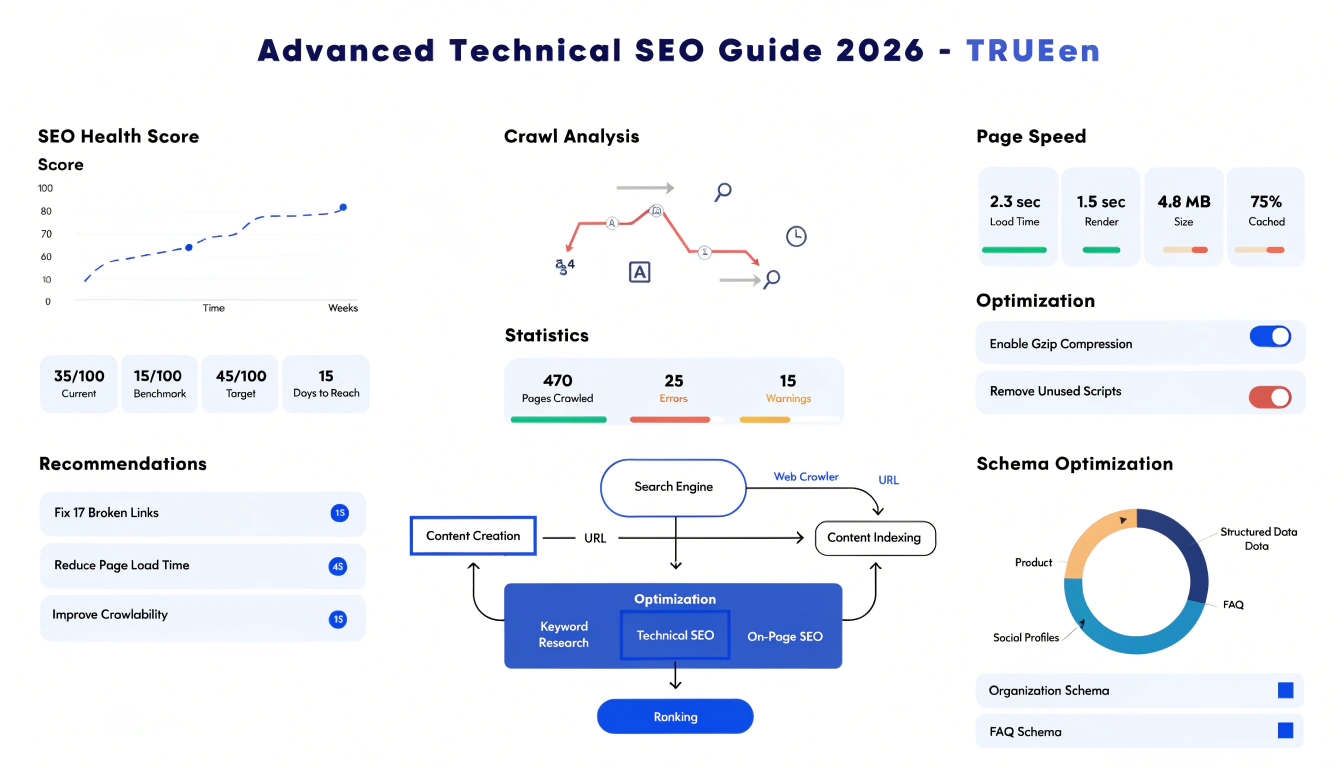
Technical SEO is no longer a back-office activity for developers; it is an essential part of modern search engine optimization. With changing Google algorithms, a user experience-oriented AI-driven search experience, and growing attention to user experience, in 2026, technical SEO will be the key to your site's success or failure in the search results.
This is the ultimate guide that covers recent trends in technical SEO, the most common mistakes, practical measures to enhance site speed, how the site is indexed, and the site's overall performance.
What is Technical SEO in 2026?
Technical SEO is the process of ensuring that your infrastructure (website) can be easily crawled, indexed, and ranked by the search engines. Technical SEO is also focused on performance, design, and usability, unlike on-page (content and keywords) or off-page (backlinks) SEO.
Technical SEO is greatly affected in 2026 by:
- AI-based search algorithms
- Page experience and core Web Vitals
- Mobile-first indexing
- Optimization of voice and AI search
Even the best content will not rank if your website is slow, broken, or hard to crawl.
Why Technical SEO Matters More Than Ever
Search engines are currently focused on user experiences and performance measures. Technical optimization of the site results in:
- Increased speed of page loading
- Increased crawlability and indexing
- Better positioning in Google
- Higher conversion rates
- Lower bounce rates
As the use of AI search engines and generative results becomes the new standard, it is essential to design websites that are friendly to both humans and machines.
Key Technical SEO Elements to Focus on in 2026
1. Website Speed Optimization
One of the highest-ranking factors is the website's speed. Users want the pages to load in 2-3 seconds.
Website speed improvements:
- Use Content Delivery Network (CDN)
- Resize pictures using next-gen formats like WebP
- Compress CSS, JavaScript, and HTML
- Enable browser caching
- Fast hosting (cloud or VPS) should be used
Trending keyword focus:
- "Improve website speed 2026"
- "Fast loading website SEO"
2. Core Web Vitals Optimization
Necessary performance metrics are Core Web Vitals:
Largest Contentful Paint (LCP): Performance
First Input Delay (FID): Interactivity
Cumulative Layout Shift (CLS): Visual Stability
Tips for improving LCP:
- Reduce images and fonts
- Reduce JavaScript that is not used
- Avoid using incorrect dimensions to alter the layout
- Opt for lazy loading
Rankings and user experience are directly affected by improvements in Core Web Vitals.
3. Mobile-First Indexing
Google has started indexing web pages based on their mobile versions. Your rankings will be affected negatively unless your site is mobile-friendly.
Optimization tips:
- Use responsive design
- Optimize font sizes and buttons
- Ensure rapid cellular loading speed.
- Avoid intrusive popups
Trending keyword:
- "Mobile-first SEO optimization"
4. Crawlability and Indexing
Search engines need to crawl and index your pages.
Resolve frequent crawl problems:
- Broken links (404 errors)
- Incorrect robots.txt configuration
- Lack of or wrong sitemap.
- Duplicate URLs
Best practices:
- Send an XML sitemap to the search engines.
- Tag duplication can be prevented by using canonical tags.
- Optimize internal linking
5. Structured Data (Schema Markup)
Organized data enables search engines to understand your content better and enhance your presence in rich results.
Popular schema types:
- FAQ schema
- Product schema
- Article schema
- Local business schema
Benefits:
- Higher click-through rates
- Better search visibility
- Snippets and AI results featured
6. HTTPS and Web security
Security is a ranking variable. Sites that lack HTTPS are considered insecure.
What to do:
- Install an SSL certificate
- Resolve mixed content problems
- Periodically upgrade software and plug-ins
Secure websites build trust and enhance SEO performance.
7. Resolving Duplicate Content Problems
Similar content disorients searches and negates ranking.
Solutions:
- Use canonical tags
- Use redirects for duplicated URLs
- Never duplicate content on other pages
8. URL Structure Optimization
Clean URLs improve search engine rankings and user experience.
Optimal strategies:
- Create concise URLs
- Use keywords in URLs
- Exclude extraneous parameters
Example:
- Bad: example.com/page?id=123
- Good: example.com/technical-seo-guide
9. Internal Linking Strategy
Internal links help distribute authority throughout your site and improve crawling.
Tips:
- Link relevant pages together
- Anchor text should have keywords
- Avoid orphan pages
10. Voice Search Optimization and AI
Technical SEO needs to change with the emergence of AI-based search and voice assistants.
Optimization strategies:
- Utilize content in natural language
- Optimize question-based queries
- Adopt structured data responses
Trending keyword:
- "AI SEO optimization 2026"
- "Voice search strategy"
Common Technical SEO Errors to Fix in 2026
The most typical problems that damage rankings are the following:
1. Slow Page Speed
A slow website will lead to higher bounce rates and lower rankings.
2. Broken Links and 404 Errors
They adversely impact usability and crawlability.
3. Absence of Meta Tags
Title tags and meta tags remain crucial for indexing and click-through rates.
4. Non-Mobile Optimized Website
Mobile-first indexation means the non-responsive website loses ranking.
5. Duplicate Content
It leads to confusion for search engines.
6. Improper Redirects
Proper use of 301 redirects will ensure that link equity is not lost.
The best technical SEO tools of 2026
These tools should be used to correct mistakes and improve performance:
- Technical audit tools for the websites
- Page speed testing software
- Crawl analysis tools
- Formatted data testing applications
These instruments can be used to recognize issues and offer practical information.
Step-by-Step Technical SEO Checklist
The following is a checklist that you can use:
- Check website speed and Core Web Vitals
- Ensure mobile responsiveness
- Correct crawl errors and broken links
- Optimize XML sitemap and robots.txt
- Implement structured data
- Protect your site using HTTPS
- Improve internal linking
- Clean up duplication of content
- Optimize URL structure
- Monitor performance regularly
Technical SEO Trends in the Future
Technical SEO is changing rapidly. The following are some of the trends in 2026:
1. AI-Driven Search
AI is helping search engines to comprehend intent as never before.
2. Generative Engine Optimization (GEO)
It is necessary to optimize content to ensure AI-generated answers are provided.
3. Zero-Click Searches
Snippets and artificial intelligence responses decrease conventional clicks.
4. Automation in SEO
AI is automating audits, fixes, and optimization.
Concluding Remarks
Technical SEO in 2026 is essentially about ensuring your website is fast, accessible, and easy for users. With technical SEO, you can ensure there are no errors on your website, speed issues are fixed, and the structure is optimized.
All these factors play a crucial role in your website's ranking. If you follow everything discussed here, your website will rank well.